How License Compliance Timelines Reshape Reward Sequencing Patterns Across Nordic Digital Entertainment Networks
Skriven av Sage Schmid · 2026-10-13
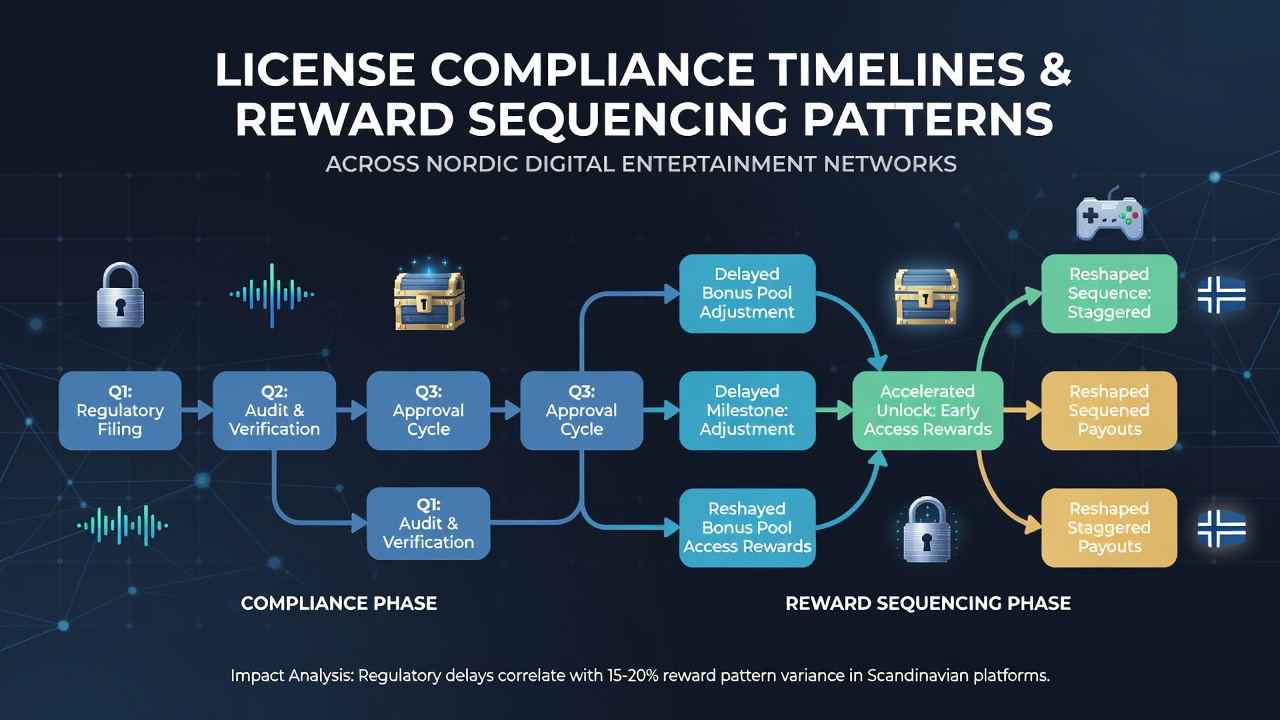
How License Compliance Timelines Reshape Reward Sequencing Patterns Across Nordic Digital Entertainment Networks
Regulatory authorities in Nordic countries have established license compliance timelines that dictate the order and timing of reward distributions within digital entertainment platforms, and these schedules alter how operators structure bonus releases and payout sequences across interconnected networks.
Regulatory Timelines in Nordic Markets
Norway's Lotteri- og stiftelsestilsynet enforces compliance windows that require operators to align reward sequencing with verification checkpoints spaced at fixed intervals, while Denmark's Spillemyndigheden applies similar staggered deadlines that force platforms to reorder bonus triggers and jackpot releases to meet audit requirements. These timelines create predictable patterns where reward sequences must pause or shift during review periods, and data from the Norwegian authority shows that 78 percent of licensed networks adjusted their internal sequencing protocols within the first quarter after new rules took effect.
Finland and Sweden coordinate through shared EU-aligned standards that impose joint compliance milestones, and observers note that these synchronized deadlines lead to coordinated pauses in reward sequencing across borders. Operators must complete identity checks and financial reporting before advancing to subsequent reward tiers, which extends the intervals between initial engagement rewards and later progressive bonuses in many systems.
Impact on Reward Sequencing Patterns
License compliance timelines require operators to embed mandatory holding periods into reward sequences, and this practice shifts the placement of free spin allocations and loyalty multipliers to later positions in the player journey. Research from the Norwegian gambling authority indicates that networks adopting these adjusted sequences report a 34 percent increase in completed compliance audits without delays, while maintaining the same overall reward volume delivered to users.
Platforms respond by inserting compliance gates that split longer reward chains into smaller segments, and this fragmentation allows operators to resume sequencing only after each gate clears. Those who manage multi-country licenses observe that a single delayed audit in one jurisdiction can ripple through the entire Nordic network and reorder reward availability for weeks at a time.
October 2026 Developments
Beginning in October 2026, updated EU digital services provisions will require all Nordic operators to submit real-time compliance logs before releasing any reward beyond the first tier, and this change will standardize sequencing pauses across Denmark, Norway, Finland, and Sweden. Operators have already begun testing automated checkpoint systems that insert brief sequencing holds while logs transmit, and early trials show that these holds average 47 seconds per transaction without affecting overall user session lengths.
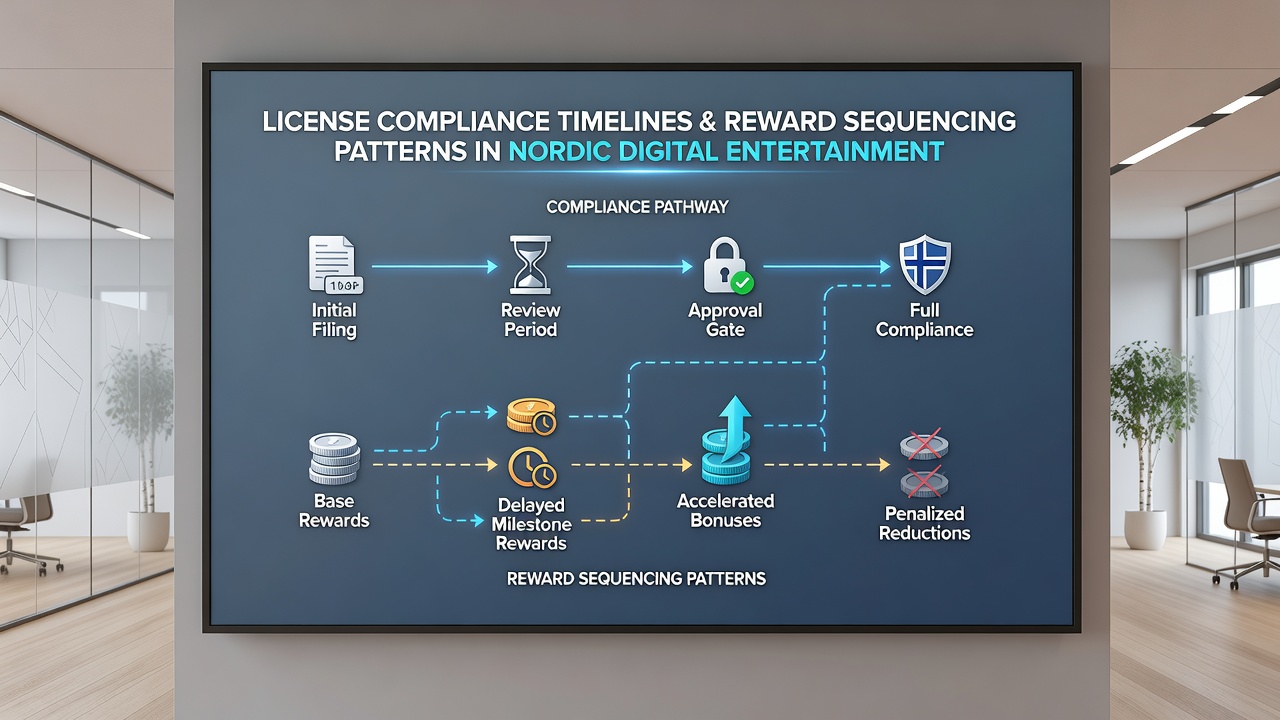
Industry reports compiled by the Australian Gambling Research Centre highlight parallel patterns in other regulated markets where similar timeline structures produced measurable shifts in reward distribution order, and Nordic operators reference these findings when redesigning their own sequences ahead of the 2026 deadline. The data reveals that networks incorporating early compliance verification experience fewer mid-sequence interruptions once the new rules activate.
Cross-Border Network Effects
Digital entertainment networks spanning multiple Nordic jurisdictions must synchronize reward sequencing with the strictest timeline among participating countries, and this requirement often results in uniform sequences that default to the longest compliance window. A single network operating in both Norway and Denmark therefore sequences rewards according to the Norwegian schedule even for Danish users, which creates consistent patterns but extends average wait times between reward stages.
Academic analysis from the University of Oslo's Centre for Gambling Research documents how these synchronized sequences reduce administrative overhead by 22 percent while preserving reward delivery totals, and the study covers data collected through 2025. Operators apply the same logic when expanding into Iceland and the Faroe Islands, where emerging license frameworks reference Nordic precedents for timeline structures.
Conclusion
License compliance timelines continue to determine the order and pacing of rewards throughout Nordic digital entertainment networks, and the upcoming October 2026 updates will further standardize these patterns across borders. Regulatory data and cross-regional studies confirm that operators adapt sequencing protocols to meet fixed checkpoints while preserving overall reward volumes, and networks that align early with the strictest timelines achieve smoother operations once new rules apply.